


SFRC PREPARATION
& APPLICATIONS
RAM ARBIA integrates steel fibers into engineered concrete systems through controlled fiber selection, project-specific dosage, organized addition, mixing, dispersion, concrete placement and finishing. The objective is to achieve a uniform Steel Fiber Reinforced Concrete mixture suited to the structural and operational requirements of each application.
Fibers perform only
when the mix performs.
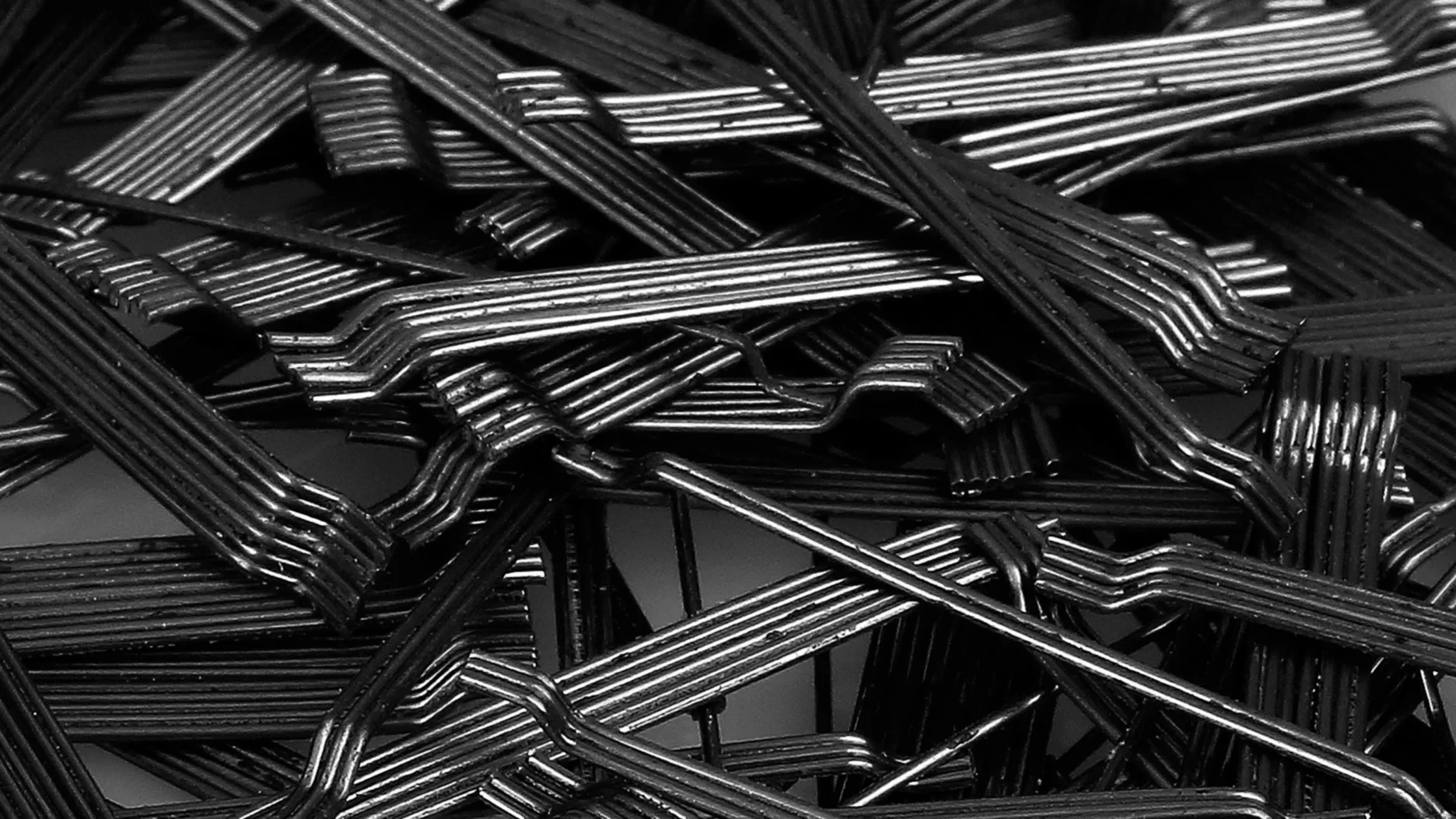
Steel Fiber Reinforced Concrete uses discrete steel fibers distributed through the concrete matrix. Unlike conventional reinforcement concentrated at defined locations, fibers are dispersed throughout the concrete volume.
RAM ARBIA treats SFRC preparation as an engineered concrete process. Fiber geometry, dosage, concrete composition, workability, addition sequence, mixing, placement and finishing must be coordinated to achieve the intended performance.
The objective is not
simply adding steel.
Proper SFRC production aims to distribute the specified fibers throughout the concrete while maintaining the workability required for transport, placement, consolidation and finishing.
Fiber quantity should follow the engineered concrete and structural requirements of the project.
Fibers should be distributed throughout the mix rather than concentrated into localized clusters.
Concrete workability should remain suitable for the selected placement and finishing method.
Fiber introduction should follow the selected fiber and concrete mixing procedure.
The completed mix must remain practical for pumping, placing, screeding and finishing.
Trial mixes and production checks can confirm workability and fiber distribution before full execution.
Add progressively.
Mix uniformly.
Steel fibers should be introduced using a controlled procedure appropriate to the selected fiber product and mixer. Rapid or uncontrolled addition can increase the risk of fiber clustering, while adequate mixing helps distribute the fibers throughout the concrete.
From design input
to ready-mixed SFRC.
SFRC production should follow the project requirements and the recommendations for the selected fiber and concrete system. There is no single universal dosage or addition method for every application.
Determine Required Performance
Establish the slab or structural requirements, loading, concrete design and intended fiber contribution before selecting dosage and fiber type.
Select Fiber Geometry & Type
Fiber length, diameter, aspect ratio, end geometry and product format should be selected around the concrete system and structural application.
Establish Project Dosage
Fiber dosage should be defined by engineering requirements and verified against concrete workability, placement method and product guidance.
Control Fiber Addition
Introduce fibers through a controlled sequence that allows the mixer to disperse them progressively through the concrete.
Check Workability & Distribution
Evaluate whether the fresh SFRC is suitable for transport, pumping, placement, consolidation and finishing.
Place & Finish the Concrete
Coordinate placement and finishing methods with the SFRC mix and final floor or structural surface requirement.
Dosage is engineered.
It is not a fixed recipe.
Steel fiber dosage can vary significantly between projects. The correct quantity should be derived from required concrete performance, structural design, fiber characteristics, placement method and the selected concrete mix.
Distribution matters more
than simply reaching dosage.
Fiber balling occurs when fibers concentrate into clusters instead of dispersing throughout the concrete. Addition rate, concrete workability, mixer condition, fiber geometry and batch configuration can all influence the risk of clustering.
Reinforcement must remain
practical to place.
Adding fibers changes the behavior of the fresh concrete. The concrete mix should therefore be developed so the SFRC remains suitable for its intended delivery, pumping, placement and finishing method.
The SFRC mix must work
through the complete pour.
Successful SFRC production does not end at the mixer. Concrete transport, pumping, placement, consolidation, screeding and finishing should remain compatible with the selected fiber system and final application.
Steel fibers across
concrete applications.
Steel Fiber Reinforced Concrete can be incorporated into different structural and flooring applications where the system is appropriately designed for the required performance.
Industrial Concrete Floors
Warehouse & Logistics Floors
Slabs-on-Ground
Pavements & Traffic Areas
Precast Concrete Elements
Shotcrete & Tunnel Applications
Selected Structural Concrete
Heavy-Duty Concrete Slabs
Steel fiber is one component
of the concrete design.
Steel fibers can contribute to post-cracking behavior, toughness and load redistribution within appropriately designed concrete. Whether fibers supplement or replace conventional reinforcement must be determined by the structural design and applicable project requirements.
Preparation changes
with the fiber format.
Steel fibers may be supplied in different product forms and geometries. Loose and glued fibers require appropriate handling and addition methods, but both ultimately depend on achieving a homogeneous fiber distribution within the concrete.
Preparation & Uses
has one specific role.
This page focuses on how steel fibers move from a selected product into a usable SFRC concrete mix and where that concrete can be applied. Other RAM ARBIA steel-fiber pages address different parts of the system.
Verify the mix
before the full pour.
Trial production and field verification can help confirm that the selected steel fiber, concrete composition, dosage and mixing procedure work together before repetitive full-scale execution.
From fiber specification
to reinforced concrete.
Steel fiber preparation should connect engineering requirements with concrete production and site execution.
Define
Establish concrete and structural performance requirements.
Select
Select the appropriate fiber product and geometry.
Dose
Establish and control the project-specific fiber quantity.
Mix
Introduce and distribute the fibers throughout the concrete.
Place
Deliver, place, screed and finish the SFRC.
Verify
Review mix quality, execution and completed concrete.
Good SFRC starts
inside the mixer.
The quality of SFRC depends on more than the steel fiber itself. Concrete design, dosage, mixing, dispersion and placement must function as one system.