


SPRAY POLYURETHANE
FOAM INSULATION
RAM ARBIA provides spray polyurethane foam insulation systems for roofs, walls, ceilings, floors and selected building-envelope applications, creating a continuous insulation layer directly over prepared substrates through controlled spray application and in-place foam expansion.
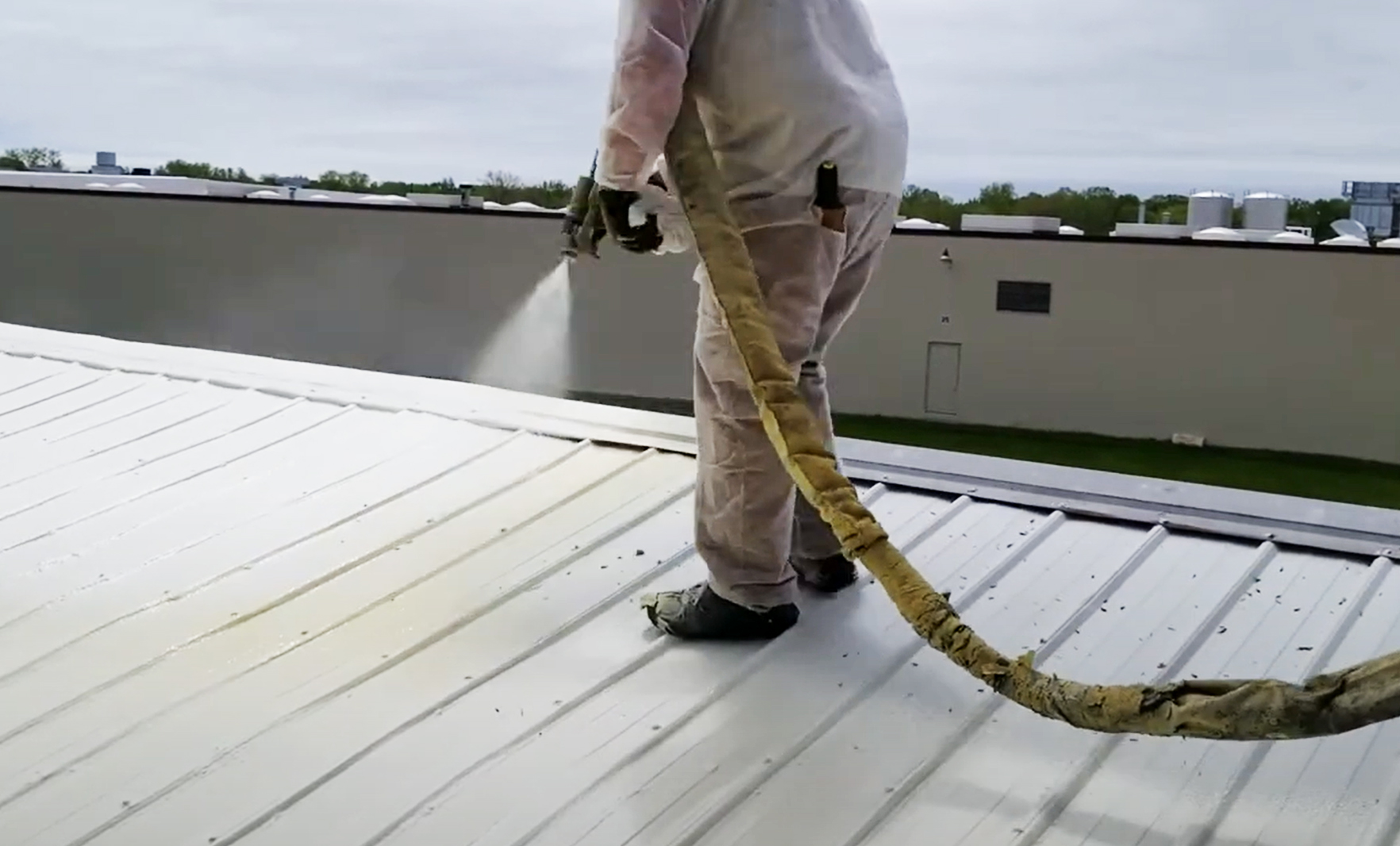
Applied as liquid.
Expanded into insulation.
Spray polyurethane foam is installed through dedicated spray equipment. The reactive materials are applied to the prepared surface and expand in place to create a continuous foam insulation layer.
RAM ARBIA approaches SPF as a building-envelope insulation system. Substrate condition, application environment, foam selection, required insulation performance, thickness control and protection of the finished foam must be considered together.
Control heat flow.
Reduce uncontrolled air paths.
Spray polyurethane foam can combine thermal insulation with air-control performance when the selected system, substrate and installation are appropriate for the building application.
Foam insulation reduces heat transfer through compatible building assemblies.
Spray application can create a continuous insulation layer across irregular surface geometry.
Selected closed-cell systems can form part of the building air-control strategy.
Expanding foam follows appropriate interfaces, profiles and surface details.
SPF can provide continuous thermal insulation across suitable roof assemblies.
Foam can integrate with compatible wall, roof, ceiling and floor assemblies.
Spray. Expand.
Insulate in place.
Spray polyurethane foam is delivered through specialized proportioning and spray equipment. Once applied, the material reacts and expands directly over the prepared substrate to create the insulation layer.
Continuous insulation
across the building envelope.
Suitable spray polyurethane foam systems can be incorporated into different building assemblies according to the project design, substrate and required thermal performance.
Roof Insulation
Spray-applied thermal insulation over suitable roof decks and existing compatible roof substrates.
Wall Insulation
Continuous or cavity-applied insulation for compatible wall assemblies.
Ceiling Insulation
Spray insulation for selected ceiling and overhead construction assemblies.
Floor Assemblies
Thermal insulation within suitable floor and underside construction assemblies.
Metal Building Envelopes
Spray insulation for compatible metal roof and wall surfaces.
Complex Geometry
Foam application around compatible profiles, corners and building-envelope details.
Building Envelope Upgrades
Selected retrofit applications designed around existing construction conditions.
Inspection & Handover
Review of foam continuity, application quality and required protective layers.
Insulation interrupts
the heat-flow path.
The required thermal performance should be established by the project design. Foam type, installation thickness and assembly configuration should then be selected around those requirements rather than applying one universal thickness to every building.
Continuous foam can reduce
uncontrolled air pathways.
Selected spray polyurethane foam products, particularly appropriate closed-cell systems, can form part of an air-control strategy when installed to the requirements of the specified building assembly.
Roof foam provides insulation.
Protection completes the system.
In suitable SPF roofing assemblies, sprayed polyurethane foam creates the insulation layer and conforms around roof geometry. The finished foam is then integrated with a compatible protective roof coating system specified for the project and exposure conditions.
Spray foam performs
from the substrate outward.
The receiving surface should be assessed before application. Loose material, contamination, unsuitable surface conditions and incompatible existing finishes can affect adhesion and the continuity of the insulation layer.
Foam chemistry and application
must work together.
Spray polyurethane foam application requires suitable equipment, controlled material proportioning and installation conditions appropriate to the selected foam system. Product-specific requirements should govern the installation method.
Both are polyurethane.
Their functions are different.
Spray polyurethane foam and polyurethane liquid membrane should remain separate service categories. SPF is primarily an insulation material that expands into a foam layer, while PU membrane cures into a comparatively thin continuous waterproofing membrane.
Insulation shaped
around the building.
Spray polyurethane foam can be incorporated into different building-envelope applications where the selected foam system is compatible with the substrate and project requirements.
Industrial Roofs
Warehouse Roofs
Commercial Buildings
Wall Assemblies
Ceiling & Overhead Areas
Selected Floor Assemblies
Select the foam
around the assembly.
Spray foam system selection should reflect the building assembly, substrate, intended location, thermal requirements, air-control strategy, exposure and required protective layers.
From envelope assessment
to continuous insulation.
Spray polyurethane foam requires controlled preparation, equipment setup, material application and protection of the completed insulation system.
Assess
Review assembly, substrate and insulation requirements.
Prepare
Prepare receiving surfaces and adjacent work areas.
Configure
Prepare spray equipment and material system.
Spray
Apply polyurethane foam in a controlled sequence.
Build & Detail
Develop the insulation layer and complete interfaces.
Protect & Inspect
Complete required protection and inspect finished work.
Thermal performance
depends on installation control.
Spray foam should be treated as an engineered insulation layer within the wider building envelope rather than simply as sprayed material.