


EPDM ROOFING &
WATERPROOFING SYSTEMS
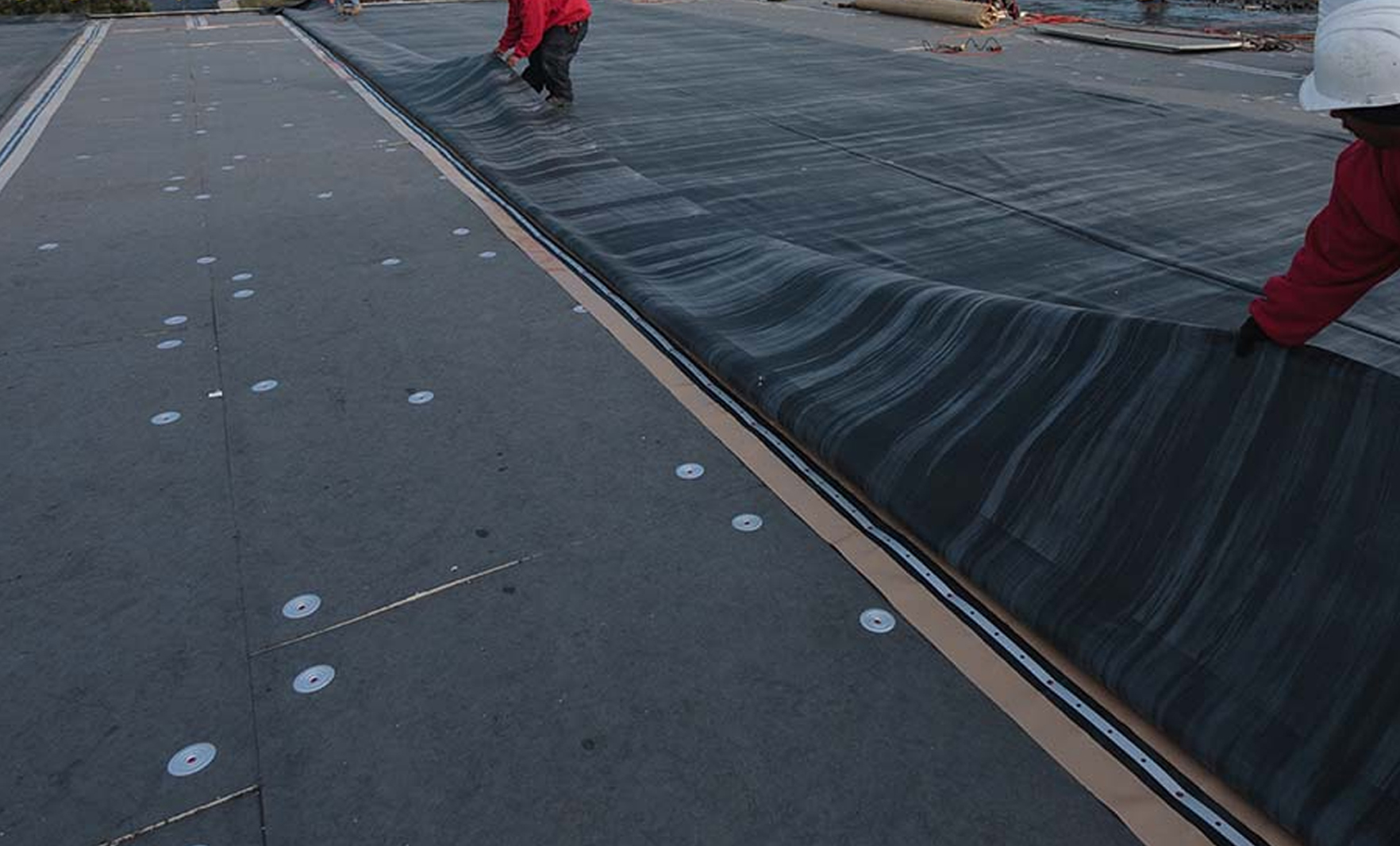
RAM ARBIA provides EPDM synthetic-rubber membrane systems for roofing and selected waterproofing applications, integrating roof preparation, membrane placement, attachment, taped or bonded seams, perimeter securement and detailed treatment around penetrations, edges and roof interfaces.
Flexible membrane.
Continuous roof protection.
EPDM — ethylene propylene diene monomer — is a synthetic rubber membrane used in roofing and waterproofing systems where flexibility and weather resistance are important to the building envelope.
RAM ARBIA approaches EPDM installation as a complete roof system, combining substrate preparation, insulation or support layers, membrane attachment, compatible seam technology and careful treatment of roof details.
Rubber flexibility.
Engineered as a roof system.
EPDM roofing performance depends not only on the membrane material but also on attachment, seams, perimeter securement, flashing and compatibility between system components.
EPDM membrane provides the primary waterproofing layer across suitable roofing applications.
Synthetic rubber construction allows the membrane to remain flexible during normal roof-service conditions.
EPDM roofing systems are widely used for exposed roof environments.
Membrane systems can use large sheets to reduce the number of field seams.
Compatible accessories allow treatment around corners, penetrations and roof interfaces.
Compatible primers, tapes and accessories support future detailing and repair work.
The membrane is rubber.
The roof is a system.
EPDM membrane operates together with the roof deck, insulation or cover layers, compatible attachment materials, seam technology and flashing accessories. Each interface contributes to the completed waterproofing system.
Secure the membrane
around the roof design.
EPDM roofing can be configured using different attachment strategies depending on membrane type, roof deck, system design and project requirements.
Fully Adhered EPDM
The EPDM membrane is bonded across the receiving surface using a compatible adhesive system selected for the membrane, substrate and roof assembly.
Mechanically Attached EPDM
Selected reinforced EPDM systems can use mechanical attachment components integrated with the specified roof build-up and perimeter securement strategy.
Ballasted EPDM
Where the roof design permits, compatible EPDM assemblies may use ballast as part of the membrane securement system, subject to structural and system requirements.
EPDM seams are bonded.
Not thermoplastic welded.
Unlike PVC roofing, conventional EPDM membrane seams are normally completed using compatible primer and splice or seam tape systems. The prepared membrane surfaces are joined and pressure is applied with a seam roller according to the selected system.
A flexible membrane still
needs a controlled substrate.
EPDM should be installed over a roof assembly suitable for the specified membrane system. Surface condition, insulation, cover boards, attachment points and roof geometry must be reviewed before installation begins.
Large sheets reduce seams.
Details still demand attention.
Roof penetrations, corners, drains, parapets and perimeter conditions interrupt the main EPDM membrane field and therefore require compatible flashing and accessory systems.
Both are single-ply.
The technologies are different.
EPDM and PVC can both be used in single-ply roofing, but their membrane chemistry and seam technologies are fundamentally different. System selection should therefore be based on project requirements rather than treating them as interchangeable materials.
Rubber membrane systems
across selected applications.
EPDM can be used in different roofing and waterproofing environments when the selected membrane and accessory system is appropriate for the application.
Flat & Low-Slope Roofs
Commercial Roofing
Industrial Roofing
Green Roof Waterproofing
Selected Pond & Water Feature Linings
Roof Detail & Waterproofing Areas
Waterproofing beneath
the landscape build-up.
Where EPDM is specified within a green-roof assembly, the membrane operates beneath additional roof-system layers. Compatibility between waterproofing, protection, drainage and landscape components must therefore be considered as part of the complete assembly.
Select the roof system
around the building.
EPDM membrane selection and attachment should respond to roof configuration, substrate, insulation build-up, detailing, exposure and project-specific waterproofing requirements.
From roof assessment
to completed rubber membrane.
EPDM roofing installation requires controlled preparation, membrane positioning, attachment, seam treatment, flashing and final inspection.
Assess
Review roof conditions and system requirements.
Prepare
Prepare the roof deck and supporting layers.
Position
Lay out and position EPDM membrane panels.
Attach
Secure membrane using the selected system.
Seam & Detail
Complete seams, flashings and roof interfaces.
Inspect
Review seams, details and completed membrane.
Flexible membrane.
Controlled installation.
EPDM roof performance depends on preparation, compatible system components, controlled seams and careful roof detailing.