


EPOXY FLOOR
COATING SYSTEMS
RAM ARBIA provides epoxy floor coating systems for industrial, warehouse, commercial and service environments, combining mechanical surface preparation, concrete repair, priming, resin application, selected aggregates and protective finishing to create durable, maintainable floor surfaces.
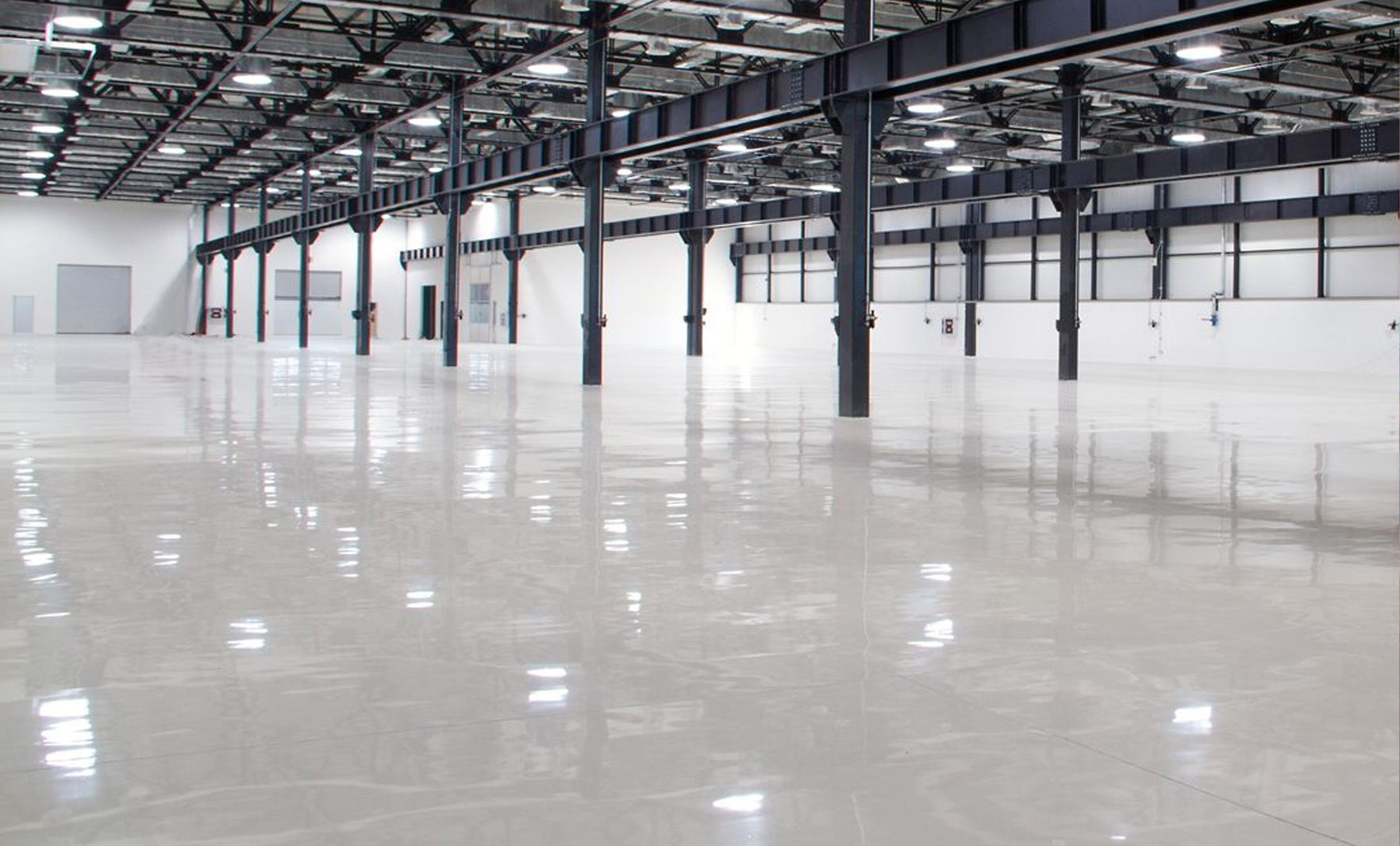
Turn concrete into
a functional surface.
Epoxy flooring uses reactive resin systems applied over a properly prepared substrate, typically concrete. Components are mixed according to the selected product and cure to form a bonded resinous floor surface.
RAM ARBIA approaches epoxy flooring as a complete system rather than a decorative paint layer. Concrete condition, preparation, repairs, primer, coating build-up, finish texture and service environment must work together.
Surface protection
built around operations.
Epoxy flooring can be configured around different operational environments. Final performance depends on resin formulation, system thickness, substrate quality, aggregate selection and exposure conditions.
Suitable systems can provide a durable working surface for pedestrian and operational traffic.
The resinous layer helps protect the underlying concrete from selected service exposure.
Epoxy coating creates a continuous finished field across properly prepared floor areas.
Compatible aggregates can be incorporated where additional surface texture is required.
Selected systems can be specified around defined chemical and process exposure requirements.
Resin systems allow different colours, textures and operational markings according to project requirements.
The finish begins
below the coating.
Epoxy floor performance starts with the concrete below it. Weak surface material, contamination, cracks, voids, moisture conditions and irregularities must be assessed before the resin system is installed.
One resin chemistry.
Multiple floor configurations.
Epoxy floors can be configured with different build-ups, textures and surface finishes depending on traffic, hygiene, maintenance, appearance and operational requirements.
Smooth Epoxy Coating
Continuous resinous finish for suitable internal spaces requiring a clean, maintainable and visually uniform floor.
Aggregate-Broadcast Epoxy
Compatible aggregate can be broadcast into the coating system to create a more textured surface where additional slip resistance is required.
High-Build Epoxy Systems
Multi-layer resin systems can provide additional build and protection for selected industrial and service-floor applications.
Decorative Epoxy Finishes
Colour, pattern and selected decorative effects can be incorporated when appearance forms part of the flooring requirement.
Epoxy adhesion is earned
before resin is mixed.
The concrete surface must be evaluated and prepared for the selected flooring system. Mechanical preparation is commonly used to remove laitance, weak material, contamination and incompatible existing coatings while creating a suitable receiving profile.
Coating does not replace
proper concrete repair.
Blowholes, voids, damaged areas, irregularities and other floor defects should be identified and treated before the final resinous flooring build-up. Structural problems must be addressed independently rather than concealed beneath the coating.
Build adhesion from
concrete to finish.
The primer forms an important interface between the prepared substrate and the subsequent resin layers. Product selection and floor build-up should follow the specified epoxy flooring system rather than mixing incompatible components.
Resin performance depends
on site conditions.
Substrate moisture, ambient conditions, substrate temperature and the selected epoxy product can affect application, adhesion and curing. Requirements must therefore be checked against the specified flooring system before work begins.
Smooth where appropriate.
Textured where operations require it.
Surface texture should be selected around actual operating conditions. Compatible aggregates may be incorporated into suitable epoxy systems to increase texture in areas where slip resistance is required.
Floor systems configured
around facility use.
The appropriate epoxy flooring configuration depends on floor condition, traffic, maintenance requirements, exposure and required appearance.
Industrial Floors
Resinous floor systems configured around industrial traffic and operational exposure.
Warehouse Floors
Epoxy finishes for selected storage, circulation and operational floor areas.
Commercial Floors
Durable floor finishes where appearance and maintainability are important.
Parking & Garage Areas
Selected resin systems for suitable vehicle and service-floor environments.
Service Areas
Functional resin flooring for back-of-house, utility and selected support spaces.
Selected Healthcare Areas
Compatible flooring systems can be selected for appropriate healthcare support areas based on project requirements.
Existing Floor Renovation
Existing concrete floors can be assessed, prepared and recoated where substrate condition permits.
Inspection & Handover
Review of coating continuity, finish and completed floor system.
Choose the floor around
how the facility operates.
A warehouse, workshop, healthcare support area and commercial floor do not necessarily need the same resinous flooring build-up. System selection should respond to actual operating conditions.
Resin selection must match
the environment.
Epoxy floor systems should not be treated as identical in every environment. UV exposure, chemical contact, temperature conditions, cleaning procedures and operational wear can influence system selection and the need for compatible protective finishes.
Resin flooring for
operational environments.
Epoxy floor coating systems can be adapted to different internal floor environments according to substrate, traffic, exposure and required finish.
Warehouses & Logistics
Manufacturing Facilities
Workshops & Service Areas
Commercial Facilities
Parking & Garage Floors
Selected Technical & Healthcare Areas
Select the coating
around the floor.
Epoxy flooring selection should be based on substrate quality, operating traffic, exposure, desired texture, maintenance requirements and the intended floor appearance.
From concrete assessment
to finished resin floor.
Epoxy floor installation requires controlled substrate preparation, repair, priming, resin application and final inspection.
Assess
Review concrete, exposure and operational requirements.
Prepare
Mechanically prepare and clean the substrate.
Repair
Treat defects and level selected irregularities.
Prime
Apply compatible primer to prepared concrete.
Apply
Build the specified resin and finish layers.
Inspect
Verify finish, details and completed flooring system.
Resin quality matters.
Preparation matters more.
Epoxy flooring performance depends on the relationship between the existing concrete, preparation method, system compatibility, application conditions and final finish.