


LOOSE
STEEL FIBER
Loose steel fibers are supplied as individual reinforcement elements ready for controlled introduction into concrete. Unlike bundled fiber, the individual fibers enter the mixing process directly, making dosing, addition sequence, concrete workability and mixing control important to achieving consistent distribution throughout the concrete matrix.
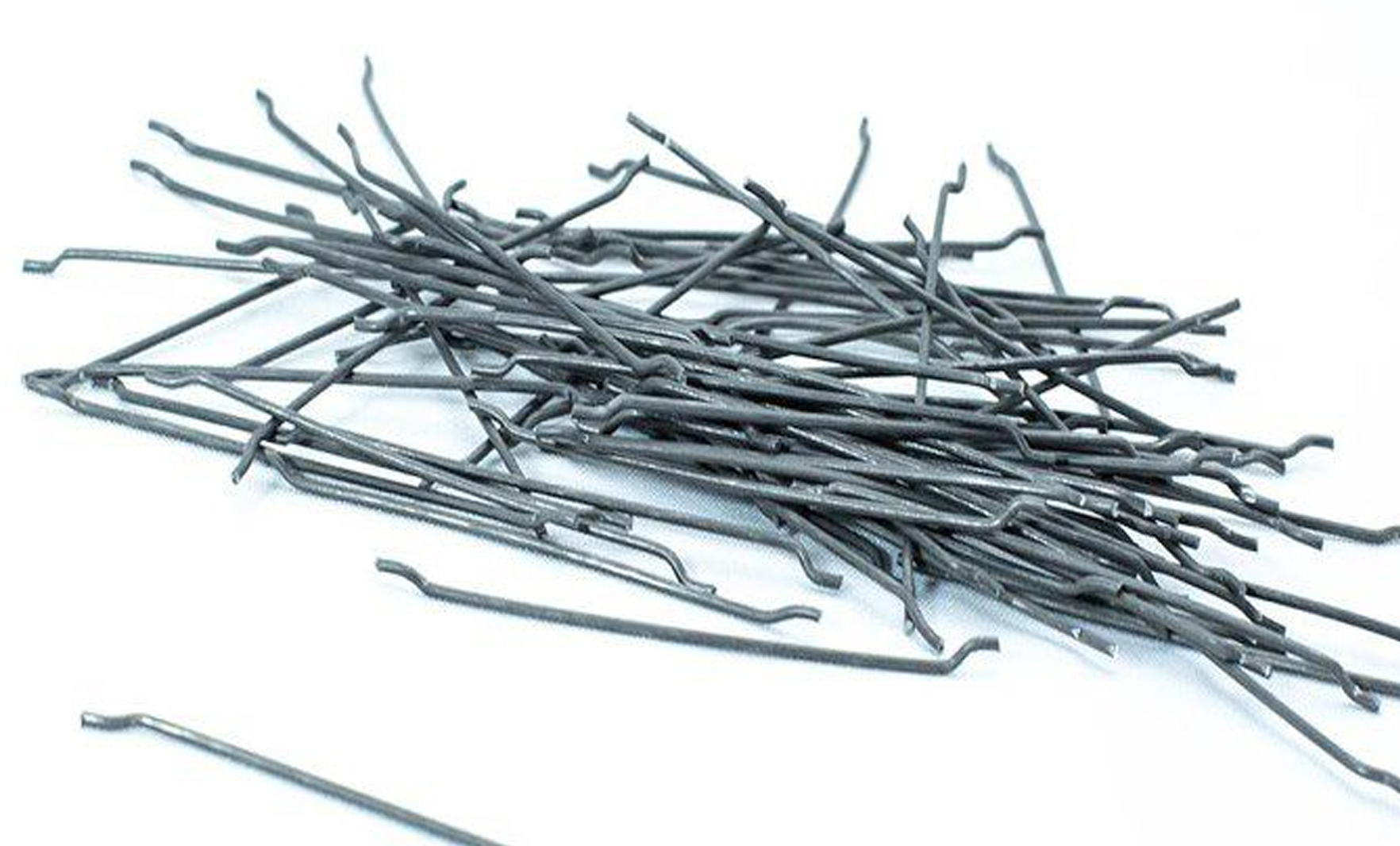
Ready to enter
the concrete mix.
Loose steel fiber is supplied as separate individual fibers rather than temporary bundles. This provides a direct reinforcement product that can be introduced into concrete through a controlled batching and mixing process.
The key consideration is not simply adding fiber. Uniform distribution must be achieved throughout the mix so the individual fibers can operate as distributed reinforcement within the completed concrete.
Individual by supply.
Distributed by mixing.
Loose steel fiber eliminates the temporary bundle stage. The fibers are already separate when introduced to the concrete, placing greater emphasis on controlled dosing and mixing practice.
Fibers are supplied separately rather than connected within glued bundles.
Product can be introduced directly through the selected batching process.
Deformed ends can provide mechanical interaction within hardened concrete.
Mixing disperses individual fibers throughout the concrete matrix.
Fiber dimensions and geometry can vary with product and project requirements.
Final performance depends on the complete concrete and slab system.
Control the addition.
Control the distribution.
Because loose fibers enter the mixer individually, the method and rate of introduction should suit the concrete production process. Controlled addition supports more consistent distribution throughout the batch.
Geometry matters
after the concrete hardens.
Where hooked-end loose fibers are specified, the deformed ends provide mechanical anchorage within the concrete and can contribute to crack bridging and post-cracking force transfer.
Loose fiber requires
disciplined mixing practice.
Because the fibers are already individual, batching and mixing procedures should be coordinated around the product, mixer, concrete properties and required dosage.
Select the fiber
around its function.
Loose steel fiber is not a single universal product. Geometry, dimensions and dosage should respond to the intended concrete performance and the overall engineered system.
The fiber alone
does not define the floor.
Loose steel fiber must be coordinated with concrete properties, slab thickness, loading, support conditions, joint strategy, placement and finishing. Final floor performance comes from the complete engineered system.
Distributed reinforcement
for demanding concrete.
Loose steel fiber can be incorporated into different concrete applications where the specified reinforcement system and construction process support its use.
Industrial Floors
Warehouse & Logistics Floors
Heavy-Duty Concrete Slabs
Concrete Pavements
Precast Concrete
Selected Structural Concrete Applications
Loose and glued fiber
solve different handling needs.
Loose and glued products are two methods of supplying steel fibers to the concrete process. Selection should be based on fiber specification, batching method, mixing equipment and project requirements rather than treating one format as universally better than the other.
Individual fibers from the start.
Fibers are supplied separately and enter the mixing process without a temporary adhesive bundle.
Bundled before entering the mix.
Fibers are temporarily joined into bundles intended to separate progressively during the concrete mixing process.
Choose the format
around the project.
Loose fiber selection should consider both structural requirements and the practical concrete production process.
From fiber selection
to reinforced concrete.
Loose fiber becomes part of the concrete reinforcement system through a controlled sequence of engineering, dosing, mixing, placement and verification.
Assess
Review structural and operational requirements.
Select
Define suitable fiber geometry and dosage.
Dose
Introduce individual fibers through a controlled method.
Mix
Distribute fibers throughout the concrete batch.
Place
Execute concrete placement and floor construction.
Verify
Review concrete consistency and final floor quality.
Good distribution
starts with good control.
Loose fiber performance depends on the relationship between engineering, dosage, concrete production and construction quality.