


CEMENTITIOUS
WATERPROOFING SYSTEMS
RAM ARBIA provides cementitious waterproofing systems for concrete and masonry structures, combining mineral and polymer-modified coatings with controlled substrate preparation, mixing, detailing and application for basements, foundations, wet areas, water-retaining structures and selected exposed construction surfaces.
Waterproofing that bonds
directly to the structure.
Cementitious waterproofing systems are cement-based coatings applied directly over compatible mineral substrates such as concrete and masonry. Once applied and cured, the system forms a protective waterproofing layer over the prepared surface.
RAM ARBIA treats the coating as part of a complete waterproofing process. Substrate preparation, defect repair, correct mixing, treatment of corners and interfaces, application and curing all influence final performance.
Mineral substrate.
Integrated protection.
Cementitious waterproofing is particularly suited to concrete and masonry construction. Performance characteristics vary between rigid and flexible polymer-modified systems and should be matched to the application.
Creates a protective cement-based barrier against water penetration.
Selected systems bond directly to properly prepared concrete and masonry.
Cementitious slurry and mortar systems can be applied to vertical surfaces.
Suitable systems can also protect horizontal concrete surfaces.
Some cementitious systems can be installed on appropriately prepared damp mineral substrates.
Polymer-modified systems can provide additional flexibility where specified.
Mix. Apply.
Bond to the substrate.
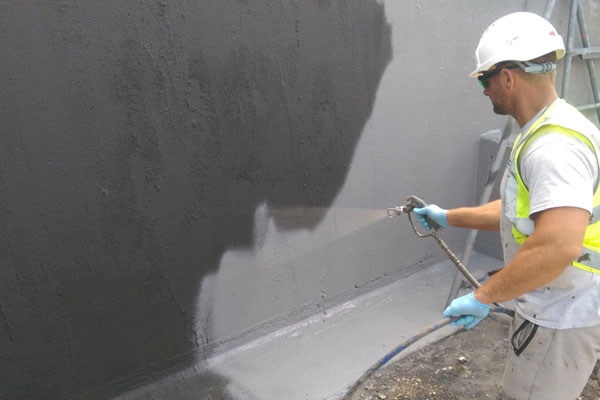
Cementitious waterproofing is prepared as a workable slurry or mortar and applied directly to the mineral substrate. Application method depends on the selected system and may include brush, roller, trowel or suitable spray equipment.
Rigid and flexible
cementitious systems.
Cementitious waterproofing is not one single formulation. System selection depends on substrate condition, movement, water exposure and the requirements of the protected structure.
Rigid Cementitious Waterproofing
Mineral waterproofing coatings suited to stable cementitious substrates where significant movement or crack accommodation is not the primary design requirement.
Flexible Polymer-Modified Cementitious
Polymer-modified cementitious systems provide greater flexibility and can be selected for applications where limited crack-bridging or movement accommodation is required by the project specification.
Protect mineral structures
from water exposure.
Cementitious systems can serve exposed, concealed and water-retaining applications depending on the selected formulation and project requirements.
Basement Waterproofing
Cementitious waterproofing for suitable basement walls and floor interfaces.
Foundations
Protection of compatible concrete foundation and substructure surfaces.
Wet Areas
Waterproofing beneath compatible finishes in selected internal wet environments.
Water Tanks
Selected systems can be specified for water-retaining concrete structures.
Swimming Pools
Cementitious waterproofing systems for suitable pool substrates prior to compatible finishes.
Concrete Structures
Waterproof and protective coating over prepared concrete surfaces.
Masonry Surfaces
Suitable cementitious systems can bond to prepared compatible masonry substrates.
Inspection & Handover
Review of coating continuity, details and completed waterproofing work.
Cementitious waterproofing
begins with sound concrete.
The coating should be applied to a suitably prepared mineral substrate. Loose material, contamination, defects and incompatible surface conditions can affect adhesion and waterproofing continuity.
Control the material
before it reaches the wall.
Mixing ratios, consistency, working time, application method and number of coats depend on the specified product. Manufacturer instructions therefore form part of the waterproofing method statement.
Water finds interfaces
before open surfaces.
Wall-to-floor junctions, penetrations, cracks and construction joints require deliberate treatment. Compatible reinforcement tapes or mesh may be incorporated where required by the selected waterproofing system.
Positive and negative sides
require different assessment.
Some cementitious waterproofing systems are designed for positive-side exposure, while selected products can also be specified for negative-side or hydrostatic conditions. Product selection must therefore reflect the actual direction and level of water exposure.
Waterproofing close
to the concrete itself.
Cementitious systems are particularly useful where waterproofing must integrate directly with concrete and masonry construction.
Basements
Foundations
Water Tanks & Reservoirs
Swimming Pools
Bathrooms & Wet Areas
Concrete & Masonry Structures
Match the coating
to the structure.
Cementitious waterproofing selection should consider substrate stability, water exposure, movement, intended finish, application side and service environment.
From concrete assessment
to waterproof surface.
Cementitious waterproofing requires controlled preparation, material mixing, detail treatment, coating application and curing.
Assess
Review substrate and water-exposure conditions.
Repair
Repair defects and prepare the mineral substrate.
Mix
Prepare the cementitious system to specification.
Detail
Treat corners, joints and penetrations.
Apply
Apply the specified waterproofing coats.
Cure & Inspect
Protect curing material and verify completed work.
Good waterproofing begins
inside the preparation.
Cementitious coating performance depends on substrate quality, product compatibility, controlled application and correct curing.