


STRUCTURAL STEEL
FIREPROOFING
RAM ARBIA provides passive fire protection systems for structural steel, including spray-applied fire-resistive materials, intumescent coatings and selected board protection systems. Each solution is coordinated around the required fire-resistance performance, steel section geometry, project exposure, substrate condition and the tested protection system specified for the structure.
Slow steel heating.
Support structural fire resistance.
Structural steel can lose strength and stiffness as its temperature increases during fire exposure. Passive fire protection systems reduce the rate at which heat reaches the steel and support the required fire-resistance performance of the protected structural member.
RAM ARBIA treats steel fireproofing as a tested system rather than simply applying a material. Steel geometry, required rating, substrate preparation, primer compatibility, protection thickness, environmental exposure and inspection must all be coordinated.
Fireproofing does not
make steel immune to fire.
Passive fire protection is designed to delay heat transfer to the structural steel for the fire-resistance period required by the project and the applicable tested system.
The protection system reduces the rate of heat transfer to the structural steel.
The system is selected to support the specified fire-resistance requirement of the member.
Protection requirements vary with steel size, geometry and exposed heated perimeter.
Materials and thicknesses should correspond to the approved or tested fire protection system.
Internal and exposed environments may require different systems and protective finishes.
Thickness and completed installation are checked against the specified fireproofing system.
Thin in service.
Expanded during fire.
Intumescent coatings are reactive passive-fire-protection materials. When subjected to fire conditions, the coating expands to create an insulating char that helps slow heat transfer to the steel beneath it.
Different steel conditions.
Different protection systems.
Structural steel fireproofing can use different passive-protection technologies. Selection should follow the required fire-resistance design, architectural requirements, exposure and tested system.
Intumescent Coatings
Reactive thin- or higher-build coating systems that expand under fire exposure to form an insulating char around the structural steel. They can be selected where steel appearance or reduced system profile is important.
Spray-Applied Fire-Resistive Material
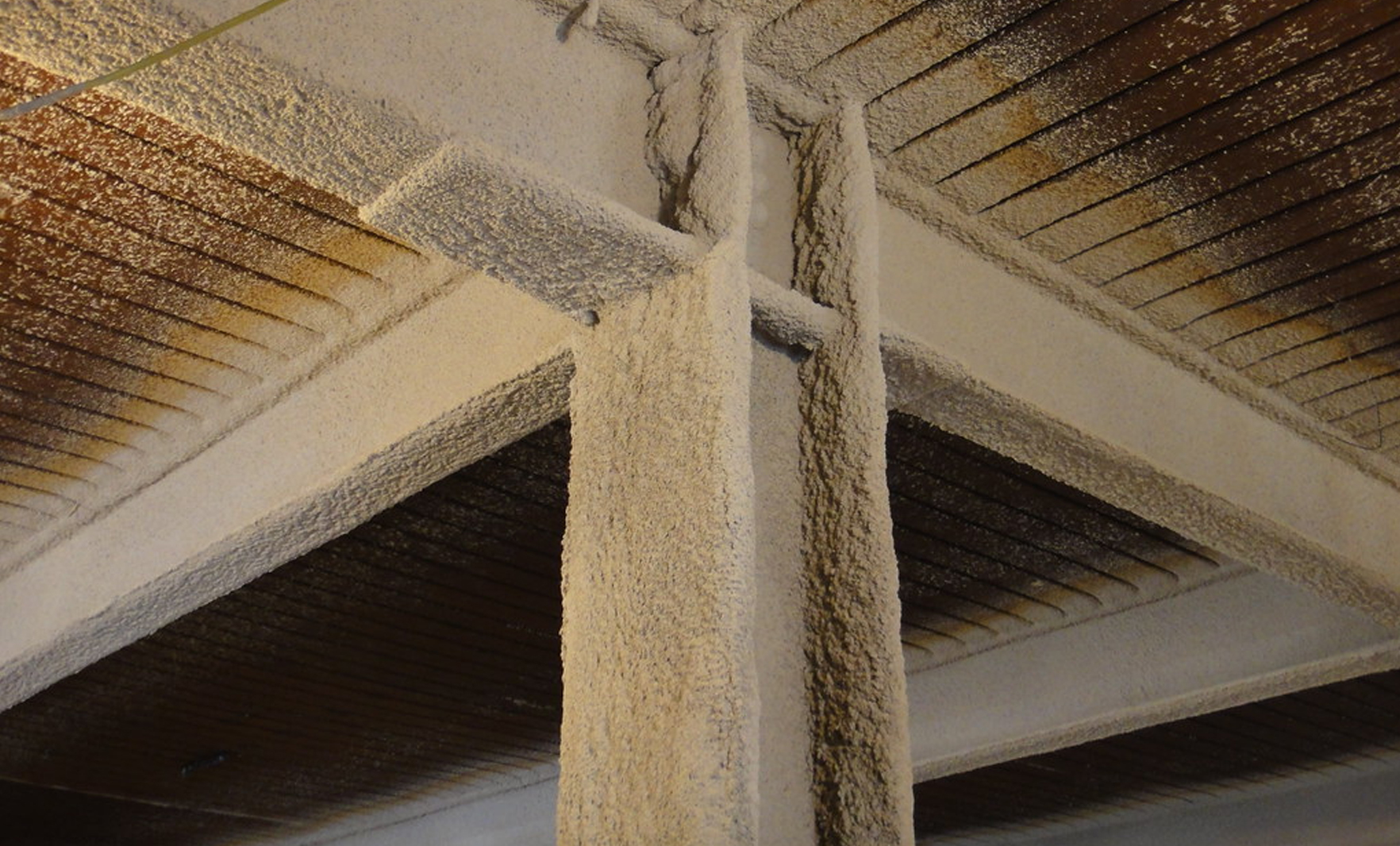
Spray-applied mineral, cementitious or gypsum-based systems can provide passive protection to beams, columns and other structural steel members where the specified tested system permits.
Fire-Protection Board Systems
Tested rigid-board assemblies can enclose structural steel where board protection is better suited to project sequence, access, appearance or environmental conditions.
Fire resistance is
member-specific.
Required protection cannot be defined from coating type alone. Steel geometry, fire-resistance requirement and the tested protection system determine the appropriate material build-up and thickness.
Compatibility matters
from steel to topcoat.
An intumescent protection system may include steel preparation, an approved primer, the intumescent fire-protection layer and a compatible sealer or topcoat where required. These components should form one approved system rather than being selected independently.
Fireproofing begins
at the steel surface.
Before passive fire protection is applied, the condition of the steel and existing primer should be reviewed. Contamination, corrosion, damaged primer and incompatible coatings can affect the completed system.
Build protection
directly around the steel.
Spray-applied fire-resistive material is installed over compatible steel and substrates according to the specified fire-protection assembly. Material preparation, application, thickness, curing and inspection must follow the selected system requirements.
Enclose the steel
with tested protection.
Fire-protection board systems can provide an alternative to spray-applied or intumescent solutions where the tested assembly and project conditions support their use.
Passive protection and
active fire systems are different.
Structural steel fireproofing protects the building structure passively. Detection, alarm, suppression and firefighting systems belong to the separate Fire Safety discipline.
Passive Fire Protection
Intumescent coatings, spray-applied fire-resistive materials and board systems that protect structural steel without needing activation from a detection or control system.
Active Fire Protection
Fire alarms, detection, sprinklers, suppression, hydrants, pumps and other systems intended to detect, control or respond to a fire event.
Fire protection must
be measurable.
Inspection should verify the completed fireproofing against the project specification and selected protection system. For intumescent coatings, this includes verification of the required dry film thickness before completion of the system.
Passive protection for
steel-framed construction.
Structural steel fireproofing can be incorporated into different building types where the structural fire strategy requires protected steel members.
Industrial Facilities
Commercial Buildings
Healthcare Facilities
Warehouses & Logistics Buildings
High-Rise & Multi-Storey Structures
Institutional & Public Buildings
Select protection around
the steel and the building.
The appropriate passive fire protection system should respond to the fire strategy, steel section, required rating, exposure, architectural finish, construction sequence and tested system limitations.
From steel assessment
to verified fire protection.
Passive fire protection requires coordination between structural requirements, product specification, steel preparation, controlled application and final verification.
Assess
Review steel sections and project fire-resistance requirements.
Select
Confirm the suitable tested passive-protection system.
Prepare
Inspect and prepare steel and compatible primer surfaces.
Apply
Install the specified coating, spray material or board system.
Verify
Check coverage and required protection thickness.
Handover
Complete repairs, inspection and final documentation.
Protection is only effective
as a complete system.
Structural steel fireproofing depends on correct system selection, substrate compatibility, controlled application and documented inspection.