


BITUMINOUS
WATERPROOFING MEMBRANE
RAM ARBIA provides bituminous waterproofing membrane systems for roofs, concrete structures, below-grade areas and selected building surfaces, integrating substrate preparation, primers, membrane placement, overlaps, detailing and final waterproofing inspection.
Protect the structure
with continuous layers.
Bituminous membranes are manufactured waterproofing sheets supplied in rolls and installed over prepared substrates to create a continuous barrier against water and moisture.
RAM ARBIA treats bituminous membrane installation as a complete system involving substrate condition, primer, membrane layout, overlaps, terminations, penetrations and protection of the finished layer.
Reliable waterproofing
begins below the membrane.
Bituminous waterproofing performance depends on selecting a suitable membrane system and controlling preparation, bonding, overlaps, detailing and protection throughout installation.
Continuous membrane coverage provides protection against water penetration.
Modified bituminous membranes may use internal reinforcement according to the selected product system.
Correct substrate preparation supports reliable membrane installation.
Sheet overlaps form critical interfaces within the waterproofing system.
Corners, penetrations and terminations require dedicated membrane detailing.
Correct membrane selection and installation support long-term waterproofing performance.
Heat. Bond.
Roll. Overlap.
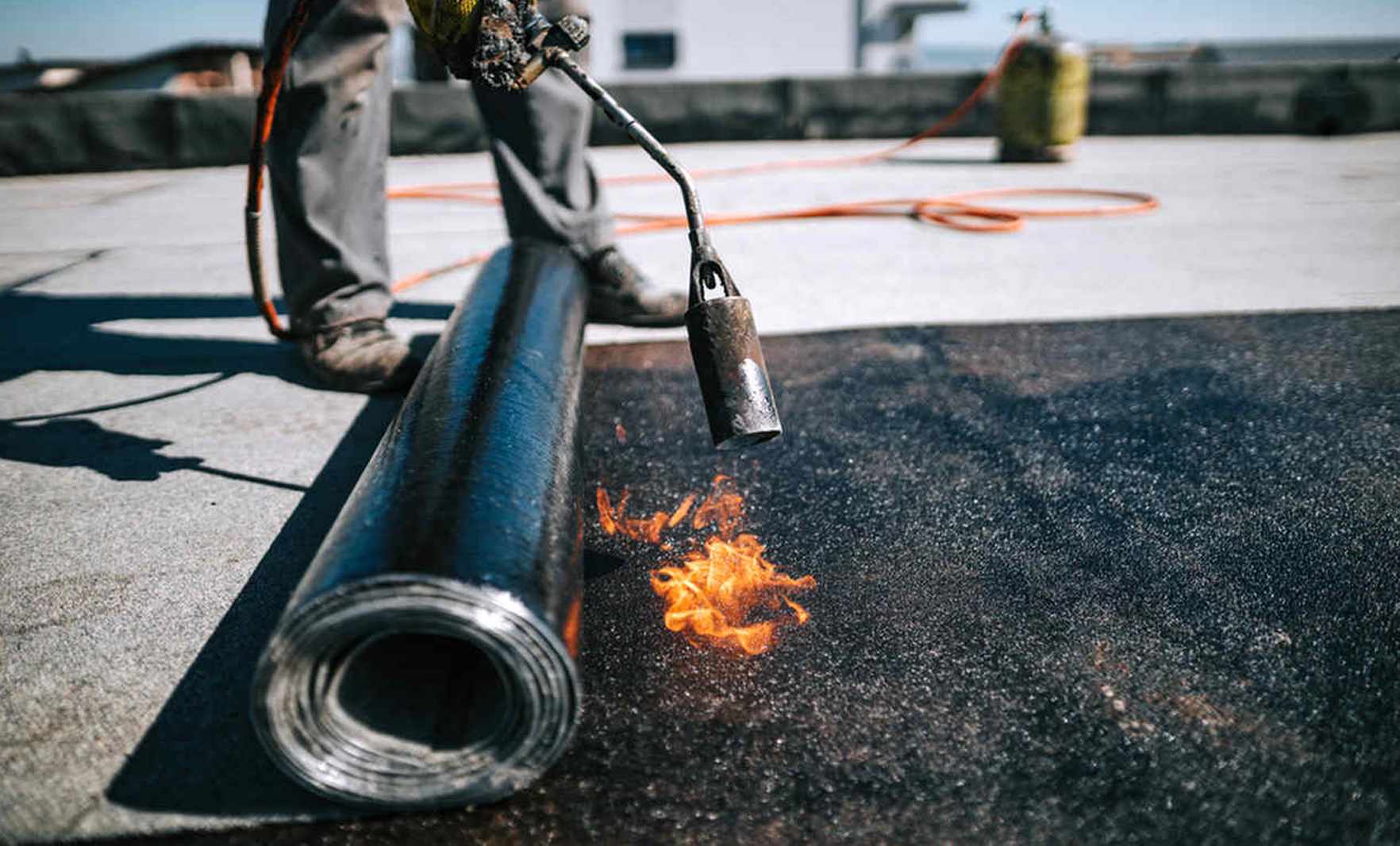
In torch-applied systems, controlled heat activates the membrane underside as the roll is progressively bonded to the prepared substrate. Adjacent sheets are installed with controlled overlaps to complete the waterproofing layer.
Membrane selection depends
on the project environment.
Modified bituminous waterproofing membranes are available in different formulations. APP- and SBS-modified systems are common categories, with final selection based on the specified roofing or waterproofing system.
APP-Modified Bituminous Membrane
Plastomeric modified bituminous membranes are used in suitable roofing and waterproofing assemblies where heat resistance and project-specific membrane performance are required.
SBS-Modified Bituminous Membrane
Elastomeric modified bituminous membranes provide an alternative membrane technology, offering flexibility characteristics according to the selected system and manufacturer specification.
Waterproofing works
as a layered system.
Depending on the project, bituminous waterproofing may form part of a multi-layer build-up integrating the substrate, primer, insulation or support layers and one or more membrane layers.
The membrane can only
follow the surface beneath it.
Before waterproofing begins, the substrate should be reviewed for cleanliness, soundness, surface defects, moisture conditions and compatibility with the selected membrane system.
Every sheet creates
an interface to control.
Bituminous membrane sheets are installed with defined overlaps. Alignment, bonding and finishing at these interfaces are critical parts of the complete waterproofing installation.
Flat areas are simple.
Details decide performance.
Upstands, corners, drains, penetrations and terminations interrupt the main membrane field and therefore require dedicated detailing.
Protect concrete before
it disappears below ground.
Bituminous membrane systems can also be used for suitable below-grade concrete applications. In these locations, protection of the finished membrane during subsequent construction becomes a critical consideration.
Waterproofing for exposed
and concealed structures.
Bituminous membrane systems can serve different building areas depending on the selected product, exposure and construction requirements.
Flat & Low-Slope Roofs
Basement Structures
Foundations
Retaining Walls
Balconies & Terraces
Concrete Waterproofing Areas
Choose the membrane
around the application.
The selected bituminous membrane system should reflect substrate conditions, exposure, membrane location, protection requirements and the intended waterproofing build-up.
From substrate preparation
to waterproofing inspection.
Bituminous waterproofing requires controlled preparation, layout, bonding, detailing and final protection throughout the installation.
Assess
Review substrate condition and waterproofing requirements.
Prepare
Clean, repair and prepare the receiving substrate.
Prime
Apply compatible primer where required by the system.
Install
Position and install membrane sheets in sequence.
Detail
Complete overlaps, penetrations and terminations.
Inspect
Review the completed waterproofing before protection.
Waterproofing quality
is built sheet by sheet.
Reliable membrane performance depends on correct preparation, controlled installation and careful treatment of every interface.